

Out of stock


Clear Filters

Out of stock
Εξαντλημένο
Οι ζωντανοί οργανισμοί αποστέλλονται εκτός Θεσσαλονίκης μόνο με ΚΤΕΛ κάθε Τετάρτη και Σαββάτο
Για τη Θεσσαλονίκη η ζωντανοί οργανισμοί παραδίδονται μόνο με παραλαβή από το κατάστημα
Το κόστος των μεταφορικών με ΚΤΕΛ είναι 10€ για παραγγελίες αξίας ως 50€. Από 51€ και άνω το κόστος των μεταφορικών είναι 7€
Κάθε σας παραγγελία μπορεί να εξοφληθεί με τους παρακάτω τρόπους:
Οι αγορές που γίνονται σε υλικά, εξοπλισμό, τροφές και φάρμακα στέλνονται με τα ΕΛΤΑ Courrier.
Το κόστος αποστολής είναι 2,5 € για βάρος ως 2 κιλά. Από 2 κιλά και άνω το κόστος αποστολής αυξάνεται +0,70€ ανά κιλό.
Εάν στο καλάθι σας έχετε αγοράσει κάποιο είδος από τους ζωντανούς οργανισμούς τότε η αποστολή γίνεται με ΚΤΕΛ ή με παραλαβή από το κατάστημα (εντός Θεσσαλονίκης)
Το κόστος των μεταφορικών με ΚΤΕΛ είναι 10€ για παραγγελίες αξίας ως 50€. Από 51€ και άνω το κόστος των μεταφορικών είναι 7€
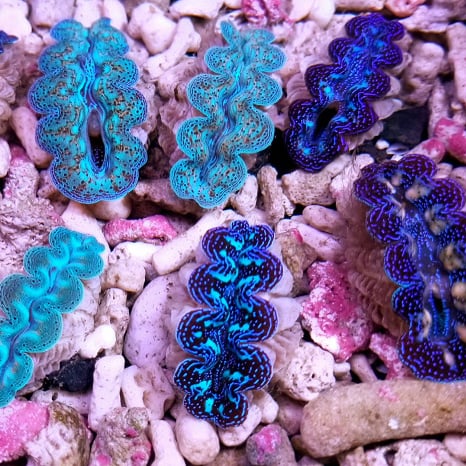
The secret of their beauty is iridocytes, or in technical terms: iridocytes. This is the name given to the cells that are located in the mantle lobes of the Tridacna , contain guanine crystals and reflect incoming light. They give each mussel a unique appearance.
In addition to the glitter cells, there are numerous symbiotic algae in the mussel’s tissue. They feed the Tridacna with metabolic products that arise during photosynthesis. The giant clams share this characteristic with corals. Both groups of animals are therefore fundamentally very similar in their requirements for keeping in an aquarium.
Place your Tridacna in a well-lit location in the aquarium and avoid shadows from reef structures or corals. Young mussels in particular can still be quite mobile and move around using one foot. Therefore, choose a location close to the ground so that the mussel cannot fall down and injure itself.
Tridacna mussels are naturally found mainly in shallow waters up to 15 m. A lighting spectrum similar to daylight is therefore the best choice for keeping them. If you use lighting with a high proportion of blue, pay particular attention to an adequate supply of nutrients. Limiting nitrates and phosphates while using intense blue lighting could otherwise cause unnecessary stress to your mussel.
This is NOT WYSIYWG. Please contact us for more photos.
| Βάρος | 1 κ. |
|---|